


Most nutra advertisers focus on creatives, bids, and targeting. Meanwhile, the thing that often decides whether the campaign scales or dies sits between the ad click and the checkout page:
THE PRELANDER
A prelander is the page users hit after the ad and before the offer. Its only job is to warm cold clickers up so they’re ready to buy by the time they reach checkout.
And in nutra native ads, it’s almost never optional.
Cold native traffic rarely converts well when users land directly on a checkout page or registration form. Users click native ads out of curiosity, not because they’re already ready to buy. That’s why direct-linking usually leads to higher CPA compared to funnels where users first go through a strong prelander.
A good prelander warms users up before the offer page. It builds emotional engagement, introduces the problem, creates curiosity, and gradually moves users toward conversion.
In native ads, the job of the prelander is simple: make cold traffic feel ready to buy. When you’re ready to build one, you can get the templates.
Grab ready-made prelander templates. Advertorial, VSL, and chat funnel layouts you can adapt to your offer in minutes. No design skills needed.
Which prelander formats convert best for nutra?
High-converting nutra prelanders combine specific headlines, before/after visuals, mobile-first speed, social proof, and well-timed CTAs. Despite hundreds of variations on the market, most high-performing nutra funnels still rely on three core prelander formats. Each one solves the same problem differently: how to keep cold users engaged long enough to emotionally commit to the offer.
| Format | Best for | How it works |
|---|---|---|
| Storytelling / editorial advertorial | Weight loss, beauty, anti-aging, male wellness | Long-form article that builds emotional engagement and frames the product as a discovery |
| VSL (video sales letter) | Mobile-first traffic, older audiences, complex offers | Video replaces the written story |
| Chat / messenger funnel | Mobile, certain GEOs | Conversational quiz with small micro-commitments |
1. Storytelling or editorial advertising
This is still the most common format in nutra native ads.
A long-form advertorial is designed to look like a health blog, online magazine article, transformation story, or expert interview. Instead of aggressively selling from the first second, it gradually builds emotional engagement and introduces the product as the “discovery” that solved the problem. However, mark it with sponsored/advertorial labeling where required.
This format works especially well for:
- weight loss;
- beauty;
- anti-aging;
- male wellness offers;
- mobility and discomfort relief offers;
- skin, nail, and varicose vein offers.
The strongest advertorials rely heavily on storytelling, before/after visuals, emotional pain points, and authority-style framing.
Specificity matters a lot here. Headlines with concrete numbers and measurable outcomes almost always outperform broad promises. Compare:
The same applies to the page itself. Quantified outcomes, timelines, and data-driven framing tend to hold attention and convert better, but every figure has to be substantiated.
Visually, these pages are usually image-heavy, and for good reason. Nutra is an extremely visual vertical. Before/after imagery remains one of the strongest conversion drivers because users instantly understand the transformation promise without reading everything first.
Many experienced advertisers also intentionally delay the main CTA until users consume enough emotional context first.
The goal isn’t just to get the click. It’s to improve the quality of the transition into the offer page.
2. VSL (video sales letter)
Some users don’t want to read a long article. They want the story explained to them.
That’s where VSL funnels come in.
A VSL prelander replaces most of the written storytelling with video: expert-style voice-over, user success stories, before-and-after progress visuals, educational-style explanations, and emotional hooks.
Structurally, the funnel is very similar to an advertorial, just delivered through video instead of text.
This format works especially well for:
- mobile-first traffic;
- older audiences;
- emotional nutra verticals;
- more complex offers.
The first few seconds matter the most. Strong VSLs hook users immediately with:
- curiosity;
- emotional frustration;
- shocking facts;
- unexpected discoveries;
- transformation promises.
Good VSLs also rely heavily on flow. The video needs to feel dynamic enough to keep cold users engaged.
Many advertisers test authority-style presentation, expert recommendations, and celebrity-inspired visuals because recognizable formats naturally attract attention. But there’s an important difference between persuasive storytelling and deceptive advertising. Don’t use real public figures or imply endorsements you don’t have.
The strongest VSLs focus on emotional engagement and trust-building.
3. Chat or messenger-style funnels
This format is still less common in US nutra compared to advertorials and VSLs, but in some GEOs it performs surprisingly well.
Instead of reading an article or watching a long video, users move through a conversation-style flow that imitates a messenger app, consultation, or guided quiz.
Psychologically, this changes the entire experience.
Users don’t feel like they’re consuming an ad. They feel like they’re participating.
Chat funnels reduce drop-off risk by replacing large content blocks with small interactions and micro-commitments. Instead of forcing users to process everything at once, the funnel guides them step by step toward the recommendation.
This format works especially well on mobile because it feels natural and familiar.
The strongest chat funnels stay simple, fast, and conversational. The moment the flow becomes too long or complicated, users drop off.
What makes a prelander convert?
Click-driven headlines
Curiosity matters, but specificity performs even better.
Headlines with numbers, timelines, percentages, and measurable outcomes usually outperform abstract promises because they feel more concrete and believable. Examples:
- “How I lost 15 KG in 2 weeks”
- “73% of women over 40 struggle with this problem”

Before/after visuals
Nutra is highly visual. Strong prelanders almost always rely on transformation visual content:
- weight loss before / after;
- skincare improvements;
- healthy vs damaged nails;
- varicose vein comparisons;
- beauty transformations.
The faster users emotionally understand the promise, the better the funnel usually performs.

Mobile-first optimization
In many GEOs, 80 to 95% of nutra native traffic comes from mobile devices.
If the page loads slowly, breaks visually, or feels heavy on mobile, conversion rates collapse before users even start reading.
Fast-loading, mobile-first pages are non-negotiable.
Comment sections and social proof
Comment sections remain extremely common in nutra funnels because they:
- create social validation;
- reduce skepticism;
- show community engagement;
- handle concerns in a more natural way.
Comment sections add social proof. Where you use them, they should reflect real user feedback and comply with platform rules on testimonials.

Gamified elements
Many advertisers use interactive discount mechanics like:
- mystery boxes;
- spin wheels;
- hidden discounts;
- “pick the right door” flows.
These elements increase engagement and make users psychologically more invested in continuing through the funnel.

Countdown timers and urgency
Urgency mechanics still appear frequently in nutra funnels, for example:
- countdown timers;
- limited availability;
- “X people purchased in the last 10 minutes”;
- limited-time discounts.
Not every successful funnel uses them, but they remain effective for reducing hesitation.

Scroll-depth CTA triggers
Many experienced advertisers intentionally delay the main CTA button until users scroll deep enough into the page.
The logic is simple: users usually convert better after consuming enough emotional context first. The CTA appears only after scrolling to the exact part of the page.

Celebrity-style authority positioning
Recognizable faces and familiar media aesthetics naturally attract attention.
Many advertisers test celebrity-inspired visuals, expert-driven framing, and media-style branding to increase engagement rates. But advertisers should carefully consider local regulations, platform policies, and compliance risks when building these funnels. Don’t use real public figures or imply endorsements you don’t have.
Compliance expectations vary heavily by GEO. Some markets, especially parts of Europe like Poland and Italy, often require additional legal elements such as:
- disclaimers;
- privacy policy;
- terms and conditions.
These elements usually don’t improve conversion rates directly, but in some GEOs they’re necessary for regulatory reasons. Always adapt funnels to local requirements instead of blindly copying what works somewhere else.
How do you track a prelander funnel in Adskeeper?
Even the best prelander becomes useless without proper tracking. Here you can find our guide to track a prelander funnel in nutra.

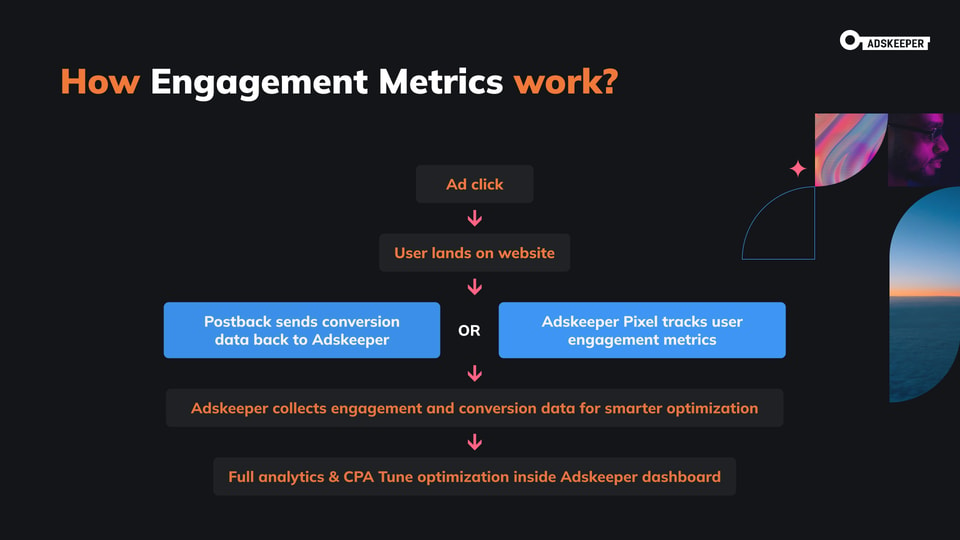
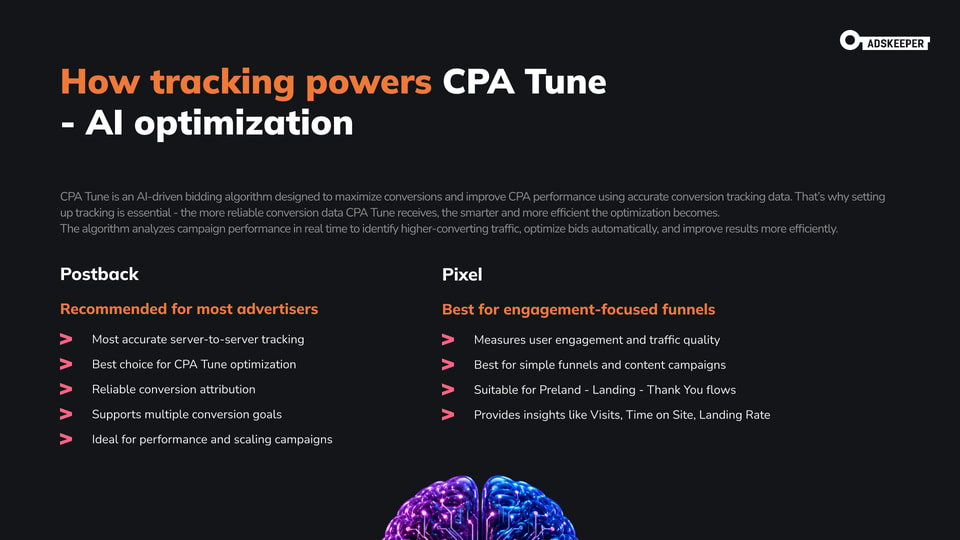
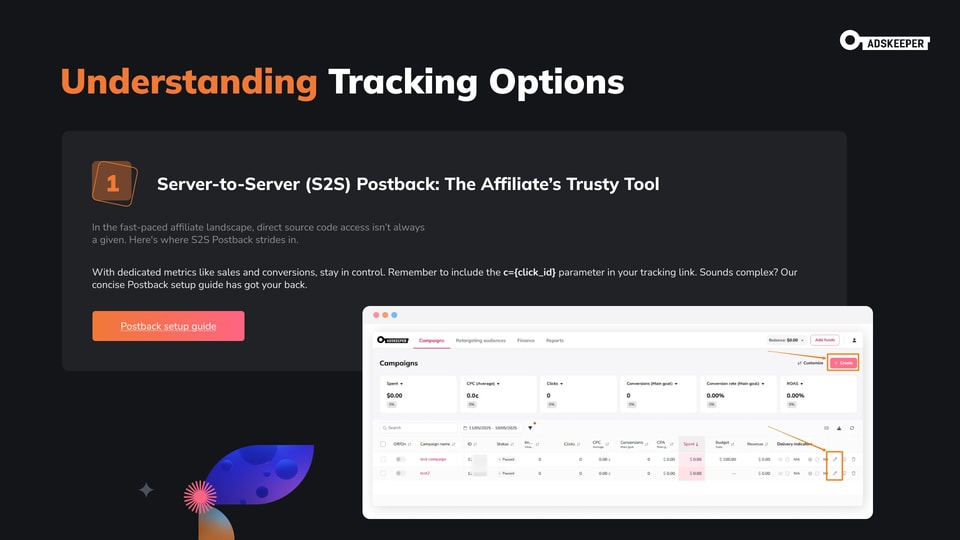
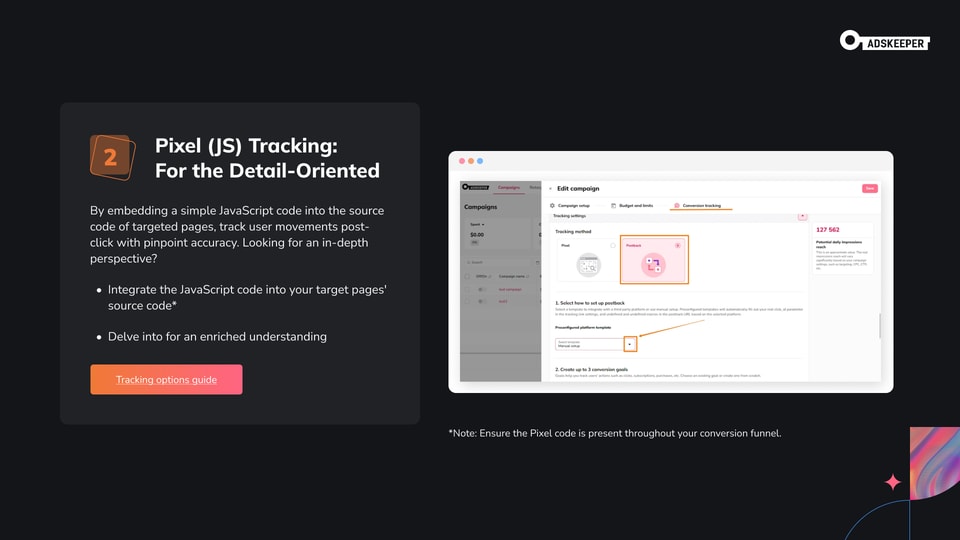
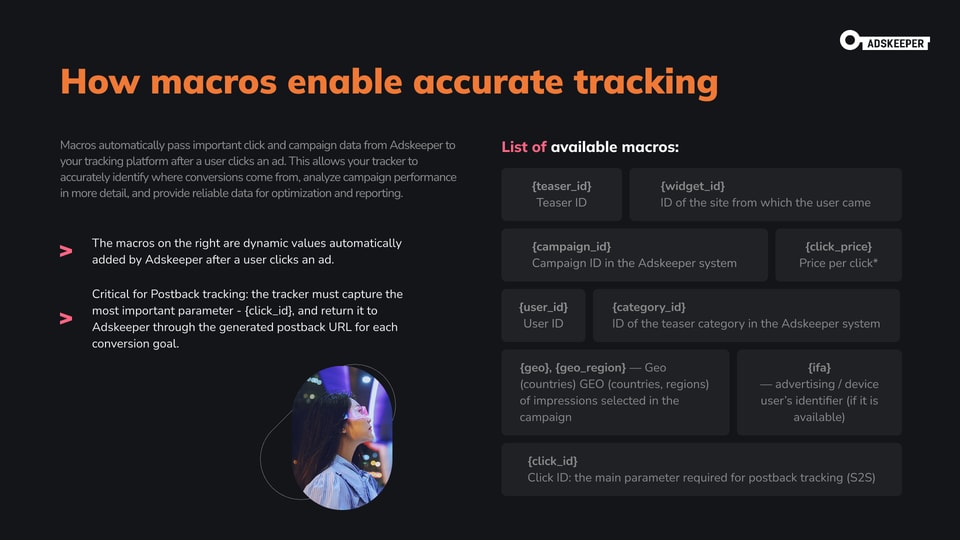
Once you introduce a prelander layer, users move through multiple funnel steps:
Without tracking, optimization becomes guesswork.
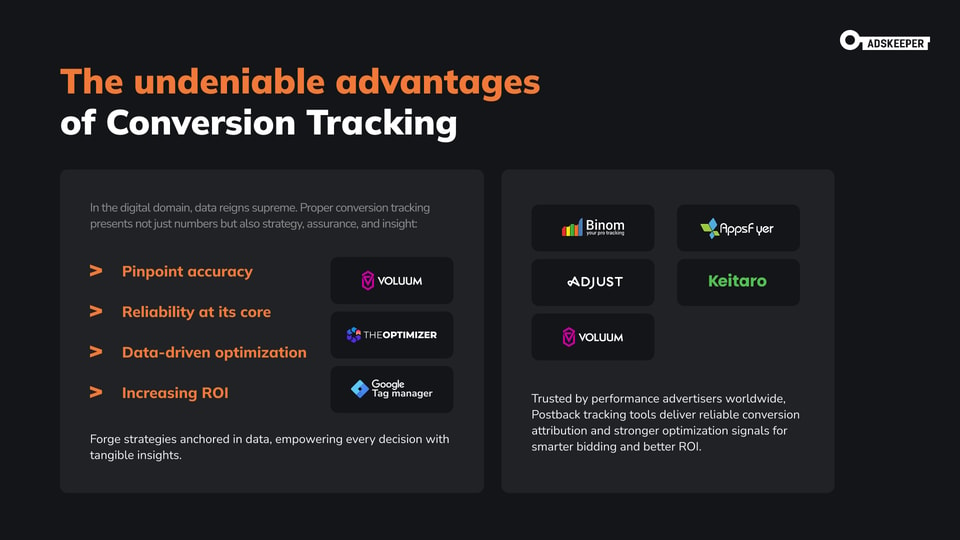
Every step should correctly pass tracking parameters and click IDs so conversions can be accurately attributed back to the original traffic source.
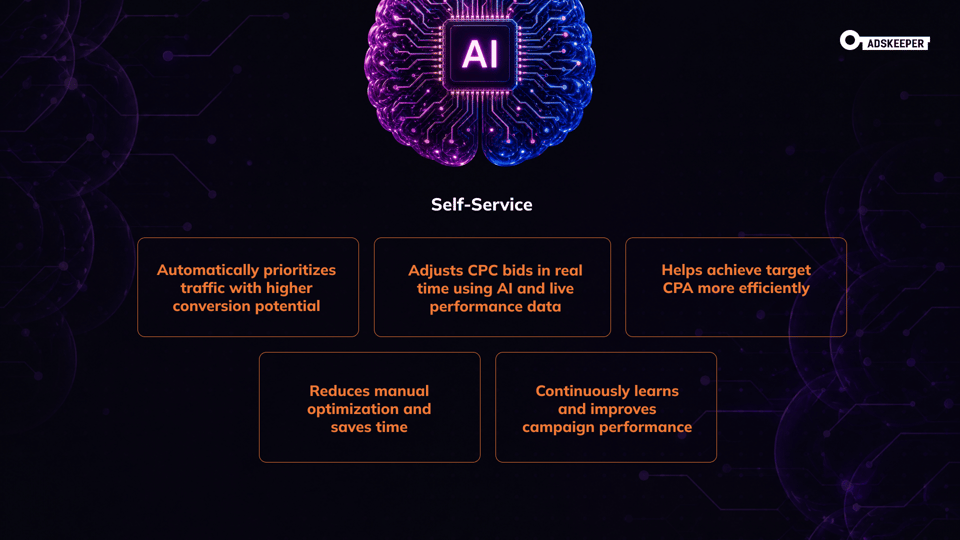
This becomes especially important when optimizing campaigns using CPA Tune.
The goal is actual conversion value.
Creative optimization also matters heavily inside the prelander itself. Key creative visuals often decide whether users continue scrolling or bounce immediately. AI tools can help advertisers quickly test multiple visual approaches, localize creatives for different GEOs, and generate new variations faster.
And finally, track and monitor everything. Sometimes the issue isn’t the offer itself. Sometimes it’s:
- weak headlines;
- poor mobile UX;
- slow page speed;
- weak emotional flow;
- bad CTA timing;
- poor visual structure.
The advertisers who scale nutra successfully are usually the ones obsessing over funnel details most competitors ignore.
Skip the blank page. We packed the formats from this guide into ready-to-use prelander templates. Pick one, swap in your offer, launch.


